
Magical power of music
Music has always been a positive force in the life of this MCC member
By Nikki Rajala
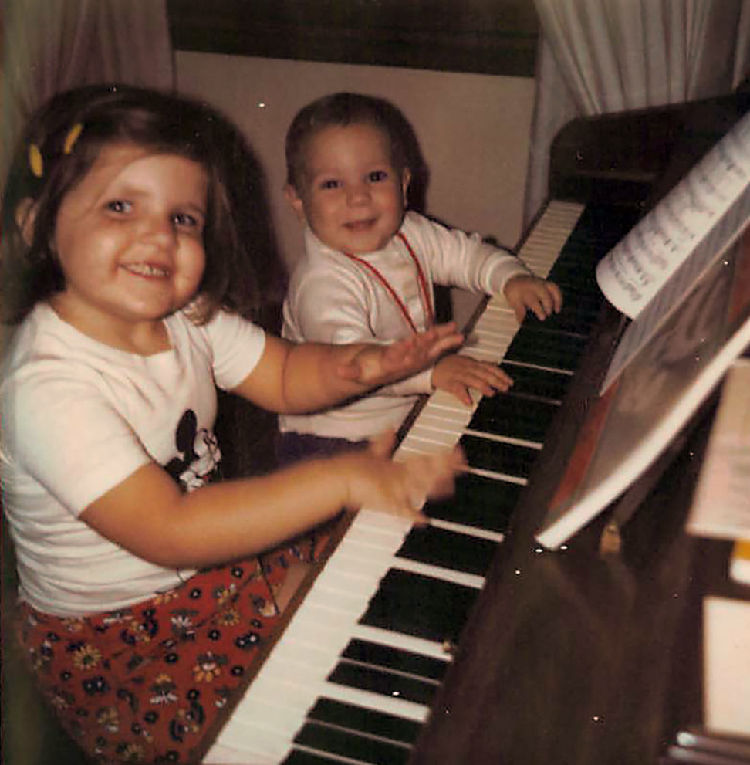
“There’s something wonderful about singing together that’s hard to explain,” said Michelle Dettmann, a member of the Minnesota Center Chorale (MCC).
“Everyone around me is breathing together, and we’re one organism. We’re creating something better than any one person could do individually — like one plus one equals 50! When that amazing sound converges around me, it’s magical.”
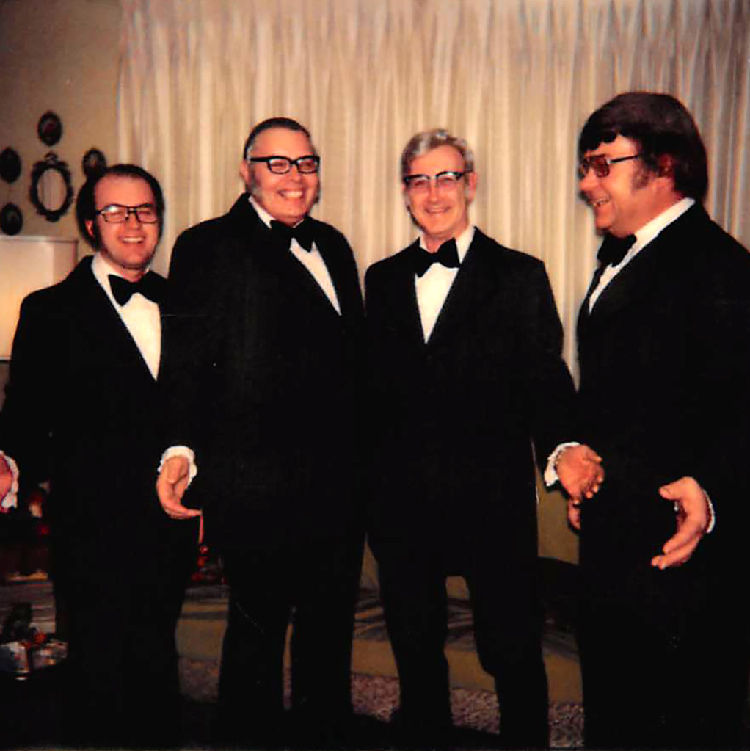
Michelle, who now lives in St. Cloud, grew up loving music. “My father was a really good tenor, but never learned to read music. He sang with Barbershop quartets and solos and duets with Mom at funerals. We all sang in choirs at Peace United Church of Christ in St. Cloud. Mom sang alto and I do too.”
She attended Concordia College in Moorhead, graduating with two majors (elementary education and Russian studies) and a music minor, having played clarinet in Concordia’s band. During those summers, she’d return home to perform in Quite Light Operas, conducted by Phil Welter (who also the founded the MCC).
“My parents never missed a concert and made sure I had opportunities to learn more. Dad died in March 1995 — he was with me in spirit and gave me the push to audition for the MCC. I was accepted and, that fall, I was so afraid I’d be late for our first rehearsal that I came two hours early!”
In her 31 years, she’s only missed three concerts. Michelle also auditioned for MCC Chamber Singers and became a member of that elite group.
Preparing for a concert involves weekly rehearsals to study a piece of music, until it coalesces into a final performance that becomes much better than any rehearsal.
“We need audiences — their presence helps us sound better,” Michelle said. “It’s fun to be so mentally engaged and physically. By the end of a concert, it feels like we’ve run a marathon. When life gets busy, it can feel hard to get to rehearsal. But once I’m there, whatever else is going on in life goes away for that while. I’m never sorry I went to rehearsal.”
Getting together to sing is what MCC members like. They’ve sung the national anthem to open a Rox game. Groups go caroling at Christmas at local breweries and Barnes & Noble, where they’re the featured non-profit and receive a portion of sales that day.
Since 2011, Michelle has worked part time as MCC’s operations manager. “I do everything the artistic director doesn’t do. She chooses music and does the hard work of preparing us. I check that programs are printed properly, ensure we have volunteer ushers, update the website and help sell tickets. I’ve designed a logo, created posters and organized advertising. I research copyright law to clarify that we have correct permissions, figure out new computer programs, advise other committees and serve on the grant committee. It’s always something different — and I love that! I bring the creativity of an elementary teacher’s mind.”
Michelle was instrumental in building a youth aspect to MCC’s concerts. Last year, one concert theme was “Peace of Wild Things,” from a Wendell Berry poem, featuring songs of nature, plants and animals. Their grant included Higher Works Collaborative, an African American church, and introduced beekeeping. Kids tasted honey, made posters and tried on the beekeeper’s hat — and discovered new music.
“Every winter we hold our Cabaret Concert at St. John’s University — a formal diner and silent auction. In 2025, we added a Sunday afternoon family-friendly concert at a reduced price. We served hot cocoa and cookies and offered kids coloring pages with Christmas and music themes. The Chorale enjoyed singing again in that beautiful space. Several people said afterwards, ‘This is the first time my child has sat through a concert.’ We’re growing a new audience.”

Recently Michelle heard her nieces singing “Sing a Rainbow.”She’d learned it in first grade, and joined them, remembering all the words.
“Besides connecting us, it reminded me how well you retain information that’s sung. Besides ad jingles from my childhood, I learned musical ‘mnemonics’ to help recall facts — like ‘Conjunction Junction’ from Schoolhouse Rock. My nieces know the states in alphabetical order and the presidents chronologically, from singing them,” she said.
Music boosts our well-being
Music and art are means of communication as old as the world — people created them in all cultures. The music from Bach and Beethoven still speaks to today, because it’s a universal and eternal art form.
Adding the element of music helps people remember information longer, because it accesses different parts and more parts of their brains. Music fires up those areas because it has mathematical, artistic and scientific components. Children do better in reading and math when they participate in arts education, which develops connections in the brain.
Michelle cited newer research on music:
• Johns Hopkins neurologist Alexander Pantelyat, who said, “Just listening to music activates more brain regions simultaneously than any other human activity.”
• Dr. Shahram Heshmat, of the National Alliance on Mental Illness, stated that “listening to music gives voice to the emotions we feel unable to express ourselves.”
• Listening to or performing music lowers cortisol (the stress hormone), blood pressure and heart rate.
• Harvard Health has found that music brings pain relief, decreases side effects of cancer treatment, helps restore lost speech and improves quality of life for neurological conditions (like dementia and Parkinson’s).
Research also shows that patients with Alzheimer’s can sing along to old songs, even when they’re no longer talking at other times. They respond to the tunes, the rhythms, the words — and sing. Just listening helps, but active participating is even stronger.
“My grandpa wasn’t responsive in his final days in a hospital, but when we sang old hymns, he squeezed our hands. He acknowledged us,” Michelle recalled.
Based on this research, memory choirs and dementia choirs have started up across the country — as well as other kinds of singing experiences.
“There’s a lot of turmoil in the world these days and we feel divided though we love the same things,” Michelle said. “Music can be a refuge. The world needs such a place, and we all need a quiet beautiful space to feel unified with the community. What if we could just sing together and release those divisions.”

With that in mind, the MCC invites the public to a free Sing As You Are (SAYA) experience on Saturday, Oct. 3, from 1-4 p.m. Singers of every ability level, age 14 through older adults, can gather at Sauk Rapids-Rice High School Performing Arts Center (1835 Osauka Rd. NE, Sauk Rapids). People will sing rounds, folk songs and call-and-response songs. From a professional clinician, they’ll learn a few vocal techniques and hear how to build chords. The day will be accessible to everyone, including those with mobility or other issues.
“Lots of us sing with the car radio and in the shower,” Michelle said, “but singing in an intentional group is different — others have the same goal and focus, they’re breathing together and watching a conductor and hearing sound all around. MCC hopes the community comes to sing with us, whether or not people can read music or have sung in a big group. Sing As You Are is an opportunity to feel that great joy and unity — and get health benefits.”

There’s no cost, no advance music preparation, no scary audition, no final concert with special clothes. SAYA is gathering people together for music’s sake, without other agendas. The emphasis is on community-building — singing with others who love to sing.
To sponsor this event, MCC received a grant from Central Minnesota Arts Board with monies from the Minnesota legislative appropriation from the arts and cultural heritage fund.
“Dr. Nicole Mattfield will lead the day as clinician. Originally from Perham, she’s one of MCC’s previous directors so we Chorale members look forward to singing with her again. She’s energetic and bubbly and will make the day fun for everyone,” Michelle said
“Making music is both remarkably complex and remarkably simple at the same time. And it’s fun. The more actively we do it, the more it engages all those parts of our brains. It’s better to do it badly than not do it at all. We’re making art. It changes us by doing it, by being a part of the art. We want to take the goodness and light that we experience in singing together, and share that in the world.”


Comments