
‘Unidentified body found’
- Feb 27
- 8 min read
Alexandria man part of 50-year old ND cold case that was recently solved
By Rachel Barduson

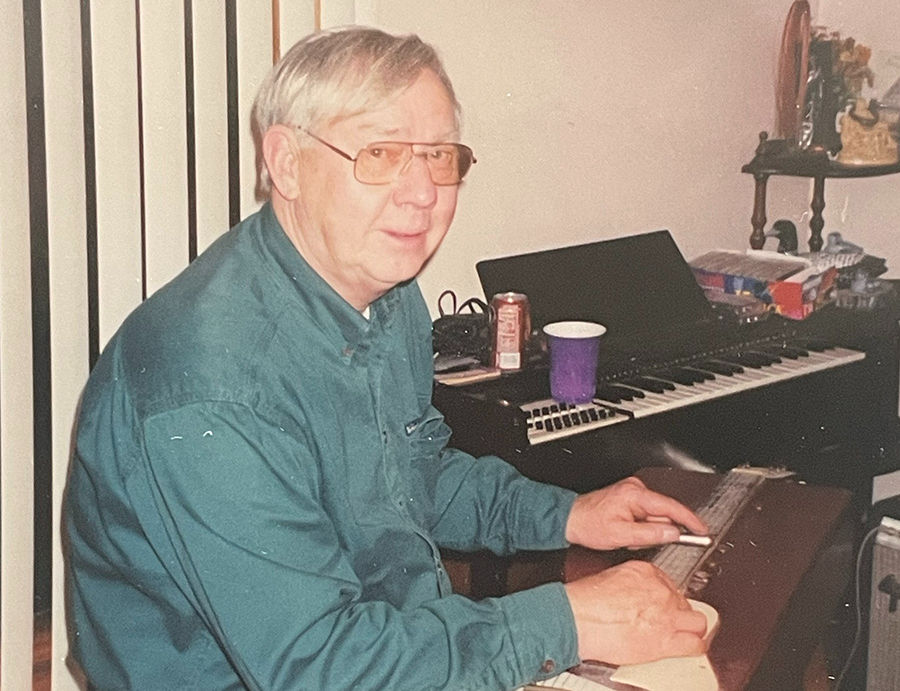
In 1963, Mark Lindsey of Alexandria earned a degree in Mortuary Science from the University of Minnesota, thus beginning a career as a mortician that would span decades of service. Mark’s grandfather, Roy C., started the Lindsey Funeral Home in Page, ND in the early 1900s. Mark’s father, Maynard C., joined the business in the 30s. Mark’s brother, Richard C., joined his dad in the 1950s and Mark C., seven years younger than his brother Richard, joined in the 1960s. As owners, the family served the communities near Page, later adding three additional funeral homes in North Central North Dakota.
There are many things that “stand out” clearly in one’s mind in a career of serving families during one of the most difficult times of their lives – death.
“It’s a ministry, a calling,” Mark explained. One particular moment came early in Mark’s career. He was a 28-year-old young man, working with his father, when a call came to the Lindsey Funeral Home from the Cass County Sheriff in Fargo.
“My dad and I were conducting a funeral in Erie, ND when the call came,” Mark explained. “Cass County Sheriff, Jack H. Daily, stated that the body of an unidentified adult male had been found near the railroad tracks south of Page.” The year was 1970. The body was discovered in the fall of the year. Investigators at the time believed that the male had been deceased for about six weeks.
“The deceased was found in what would have been grass that was at least two feet tall in the summer, but now it was fall and the grass had dried. The railroad crew had seen the body and they were the ones who called the sheriff. When the call came from Sheriff Daily, Dad told me to go to the funeral home to get a stretcher and body bag. I called Oscar England, the sheriff’s deputy who lived in Page, and he went with me to the scene of death. Later, the deputy coroner at the time, Galen Eash, came to the funeral home to confirm the man’s death.”
A couple days later, Lindsey was instructed by the sheriff to take the body to the x-ray department at St. Luke’s Hospital (now Sanford) in Fargo. The x-rays revealed multiple fractures, and from the amount of bone calcification they were able to determine that the man was in his 60s. From St. Luke’s, Lindsey was instructed to bring the body to the Cass County Sheriff’s garage, where they performed an examination.

“People present there were Sheriff Daily, myself, Deputy Oscar, plus other deputies and the Chief coroner, Dr. D.H. Lawrence. Following the examination of the body, the cause of death was ruled ‘undetermined.’ The coroner verified the death, and I returned with the body to our funeral home, and later typed the death certificate. It was the most unusual death certificate I had ever completed. All that it included was the date, male, and location found.”
“The Cass County Sheriff’s Office investigated the case as a possible homicide because evidence suggested the man had been assaulted, robbed, and either thrown or had fallen from a moving train,” Lindsey recalled.
A duffel bag was found about a mile west of where the body was discovered. In it was a St. Paul newspaper and a cellophane wrapper from cigarettes indicating they were purchased in Minnesota. Also in the satchel was a pair of underwear matching the underwear on the deceased male. The investigation determined he was traveling east to west, likely coming from the Twin Cities. No suspects or persons of interest were ever found or identified. With no identification, the man was buried at the Page Cemetery, with a headstone marked “Unidentified Male – Died 1970.” The Lindsey Funeral Home furnished a casket paid for by Cass County.
“We buried him after Pastor George Gutzman read scripture and we prayed a prayer,” he said.
Fifty-five years later, Mark received a phone call from a high school classmate, Gayland Baasch, sexton of the Page Cemetery. Baasch had been contacted by Dr. Jennifer Bengtson, a professor of anthropology at Southeast Missouri State University. She had begun an effort in finding additional analysis of the remains of the unidentified adult male, funded by private donors who support the University’s anthropology department.
Baasch called Lindsey to let him know that the body of the unidentified adult male had been exhumed on July 1, 2025 and an upper denture was recovered from the skeletal remains.
“The denture plate was labeled ‘Tate. W. H.’ with a military service number printed beneath,” Lindsey said. Following this discovery, using genealogical and archival resources and data bases, investigators traced the denture information to a World War II enlistment record for William Howard Tate. Mr. Tate had served in the U.S. Army during World War II, from 1940 until 1945, and held the rank of Sergeant when honorably discharged.
“This was quite exciting, 50 plus years after death,” Lindsey said. “And it doesn’t stop there. Putting the puzzle pieces together included research by the military and I give credit to Cass County Coroner, for following through on trying to contact the family. They were able to locate Mr. Tate’s grandchildren. With certification of military service, the Veteran’s Administration will now provide a marker for Mr. Tate’s grave. Thank you to Chris Deery, Veterans Service Officer, Fargo. Thank you, Kristi Ross, Cass County Coroner and Staff, for relentlessly searching for and notifying Mr. Tate’s family. Mr. Tate’s wife had died four years after her husband. Also, thanks to Dr. Jennifer Bingston, Anthropologist, SE Missouri University, and her students who examined the exhumed remains.”

That brings us to the present-day, remembering and reminiscing about a very major and unique case in the career of Mark Lindsey, as a mortician and owner of a funeral home. His wife, Pat, reflects, “I find it very interesting how clearly Mark remembers details from 55 years ago.” Pat continued, “We lived in Page which was 55 miles from Fargo. Because of his ‘on-call’ job responsibility of being available at all hours and all days, he would always tell me where he was going when he left the house so I could contact him. There were no cell phones or GPS those days. The Lindsey Funeral Home had the responsibility of ambulance calls as well as death calls.”
“Yes, ambulance calls,” Mark recalled. He reflected on being on a call when his sixth-grade teacher was killed in a car accident. “It hits you. It was a different level of stress.” That was just one example, “My Dad and I did this for eleven years before we turned it over to the city.”
Mark continued, “Pat went from being a farm girl to marrying me and living in a funeral home. Our meeting was ‘divine calling’ – meant to be.”
The meeting of Mark and Pat did have a unique setting of its own.
“It was a Sunday afternoon and my buddy, Harold, and I were ‘dragging the main’ in Page, ND. Harold wanted to date Pat’s sister, Sharlyn. He spotted Pat in a car and stopped her and arranged a double-date to attend a Dean Martin and Jerry Lewis movie.” The rest is history. Harold married Sharlyn, and after dating for five years, Mark and Pat also married. They made their home in the Twin Cities where Mark had one year of university studies left and Pat taught school in Bloomington. They later returned to Page where Mark worked alongside his dad again for 11 years. In 1974, Mark’s dad was ready to retire and Mark and Pat were ready for a change. After researching a few locations and being hired by Paul Anderson, they moved their family to Alexandria.

“The Andersons were good to work with. Knowing that what we do makes a difference in people’s lives – that’s what kept me going in my career choice. It’s definitely a ministry. There were a few times I considered changing to a different career, but then you find yourself in the midst of things where you are needed the most. Just this past year, I was attending a funeral of a friend and I was thanked by a woman who had previously lost her baby. If her baby had lived, she would be 42 now. This mother remembered and thanked me for helping them through that time. She told me she never forgot how we supported her in the most difficult time of her life. That hits you right here,” Mark said, as he put his hand on his heart.
After 30 years Mark retired from Anderson’s. After retiring he continued on another path, starting Lindsey Monument in 2004.
Later he tried a couple different jobs, and then he joined the Lind Family Funeral Home staff, where, when needed, he has assisted with funerals for the past 10 years.
“The Lind family has been great to work with. It’s a special kind of calling,” Mark said.
In addition to daily responsibilities throughout his career, Mark recalled, “I really enjoyed giving eighth graders tours of the funeral home and also giving technical college nursing students tours. It was a different part of the job. In addition to the tour, I explained to them why we have funerals.” Mark has seen so many changes throughout his years as a mortician. “Just think of the advancements made in forensics, since the body of William Howard Tate was discovered.”
In 2007, Mark had open-heart surgery because of 9 blockages in his heart. He shared this brief analogy.

“They fixed that with three bypasses,” he said. A special heart is needed in the life of a mortician and provider, and their spouse. “I have an analogy that explains it - for me anyway,” Mark said. “Think about a child who gets hurt, goes and tells their mom, crying as they tell her about their hurt. Mom gets a band-aid, puts the band-aid on the hurt, and the child stops crying because mom shared in their hurt. She diminished that hurt with a band-aid, and shared the child’s hurt. Band-aids. It’s a simple analogy, but that simple action with the band-aid made the situation a ‘shared hurt’ – in other words, sharing the hurt helped heal. All the families and friends who attend funerals are band-aids!” Cards, flowers, and food are all “band-aids” that diminish the hurt and sorrow.
“Joy shared is joy increased. Hurt and sorrow shared is hurt and sorrow diminished. It’s why we have funerals. There was a need in 1970 - with an unidentified adult male - that called for a graveside service, to honor this man who no one knew. We didn’t have all the answers but we shared the hurt and the sorrow. He is someone who I never forgot. Now, years later, knowing his name. It brings it full circle.”
Mark and Pat are now enjoying a life of retirement.

Comments