
Visual timestamps
With the 250th anniversary of America nearing... a look back at scenes from 150 years ago
By Julie Parent

On July 4, 2026, people across America will celebrate the 250th anniversary of the signing of the United States Declaration of Independence.
“I am excited for the Semiquincentennial,” said Brittany Johnson. Brittany is the Director of Operations at the Douglas County Historical Society (DCHS) located inside the historic Knute Nelson house in Alexandria.
In addition to planning events and programs held throughout the year, Brittany was instrumental in putting together a 2026 wall calendar printed with donated black and white photos. With the 250th anniversary in mind, the photos selected for this year’s calendar features a photographer who was active in this area about the time of the country’s centennial (100 year anniversary). The photos were taken by N.J. Trenham approximately 150 years ago. Trenham was a portrait and landscape photographer. He moved to Alexandria in 1875, and the pictures he took were used to promote the area. Shortly after moving to Alexandria, Trenham started taking pictures of homes, churches, area businesses and people in both Douglas and Pope County (and others).
There is a picture of the Ladies Bazaar in Alexandria, which was a general store with a variety of things for sale such as cookware, furniture, and clothing.

Included in Trenham photos is one of Knute Nelson, who was practicing law and farming in Alexandria at the time. He went on to serve as Douglas County attorney, presidential elector, University of Minnesota regent, Fifth Congressional District representative, Governor of Minnesota and U.S. Senator.
Since it was not uncommon for lightning strikes to start wooden buildings on fire, several pictures of firefighters were taken. In addition, there is a picture of a flagpole that was erected for the centennial celebration in 1876.
Trenham’s photos captured an interesting time in Alexandria history. Before the railroad was expected to come in 1876, Alexandria was being marketed as an industrial hub. The thought was Main Street, now named Broadway Street, would be a good place to open a business, like a shoemaker or blacksmith shop. It was considered a place where families could realistically live, farm, and attend church, too.

At that time, people had to take a small stagecoach to travel to Alexandria. Sitting on the bumpy stagecoach with their luggage on their lap was so uncomfortable, some of the passengers preferred getting out and walking alongside it.
The railroad that was initially planned, the Saint Vincent Extension, did not come to Alexandria. Brittany said it went “belly up,” and the people felt that “never was there a more somber occasion.” But after a different railroad line arrived a couple of years later, the focus shifted. Now that people from the Twin Cities could ride in luxury and comfort, Alexandria was promoted as a vacation spot that was naturally cooler in the summer because of its lakes.
According to DCHS, Alexander Kinkead and his brother William founded Alexandria in 1858. However, they left when they enlisted in the United States Civil War, which took place between 1861 and 1865. Almost all the other early settlers fled Alexandria in 1862 during the Dakota War.

Originally from the Eastern United States, globetrotting William Hicks and his wife Theresa came to Alexandria in 1866. Shortly after arriving, they bought the original townsite. William had a mind for business ventures, but he was in poor health. William died eight years after moving to Alexandria at the age of 39.
Theresa, who was a deaf and partially blind mother, decided to donate land she’d owned with her husband for schools, parks, churches, and the Douglas County Courthouse. Because of her generosity, she has been referred to as the “Mother of Alexandria.”
According to the “City of Alexandria Historic Context Study” prepared by Patrick Smith of Smith & Main, LLC in July 2013, Alexandria’s population had grown to approximately 400 by 1878. The Kids Encyclopedia Facts website shows this figure jumped to 1355 in 1880 and 2118 in 1890. The highest population on the list was 14,335 recorded in 2020.
Trenham also ventured out to photograph other communities while living in Alexandria. One community that he appeared to spend quite a bit of time in was the newly formed city of Glenwood (1866), located about 15 miles south of Alexandria.
“Trenham’s early Glenwood photos are a fantastic timestamp for us,” said Merlin Peterson, executive director at the Pope County Museum. “They give us the visual version of news stories at a time before photos could be printed in the newspaper.”
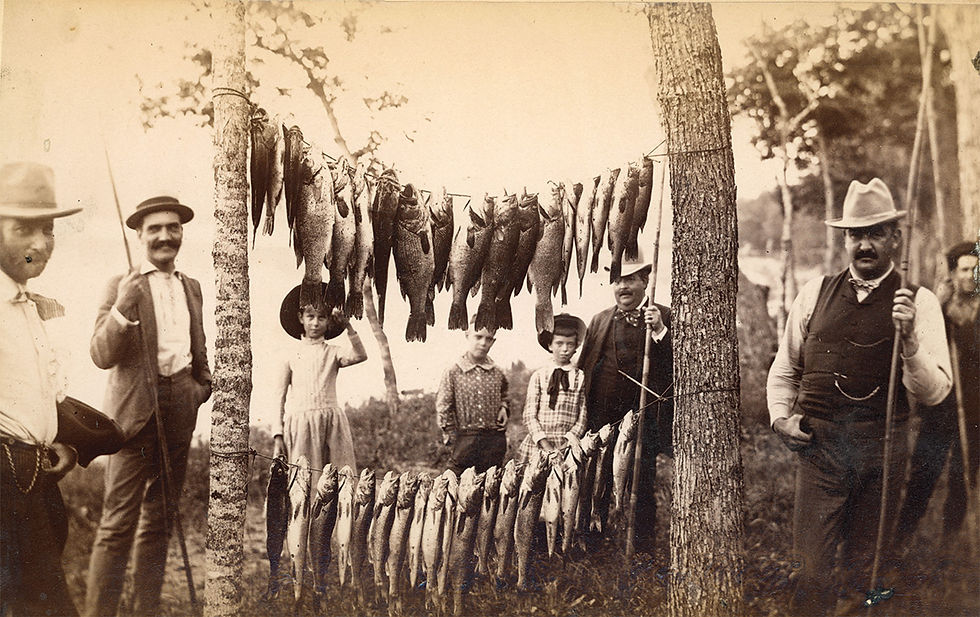
Peterson said printed images during that time required an engraved plate which took time to make. While the Pope County Historical Society (PCHS) collection includes some images from other photographers, Trenham’s work is the most complete collection of the area during that time.
Some of the Glenwood area photos include downtown businesses such as Stanley’s Horse Shoe Shop (a blacksmith), Wollan Brothers’ Store/Fremad building, Rue Drugstore, Lathrop & Blodgett’s Mill, Durkee’s Hotel, Stensing and Peterson Hardware Store, and the county’s second courthouse. In addition, several homes were photographed with their occupants often included in the shots. Some of these buildings are still standing today.

Glenwood was founded in 1866 on the eastern shores of Lake Minnewaska and was named the county seat of Pope County the same years. It was officially incorporated as a city in 1912. Besides the lake, its early development centered around agriculture and a railroad connection in 1882.
Trenham’s work has enhanced both the DCHS and PCHS and both feature his works prominently at their respective museums. Trenham also took photos in other parts of the state, including several from the Fergus Falls and St. Cloud area. To find his collection, visit the Minnesota Digital Library at mndigital.org and put Trenham’s name in the search bar. Minnesota Digital Library is a free, collaborative online portal that offers searchable access to digitized historical materials from over 200 Minnesota libraries, museums, archives, and historical societies. The collection includes photos, maps, audio files, documents and more.


Comments